French (Fr) Size to mm: Catheter and Bougie Conversion Chart
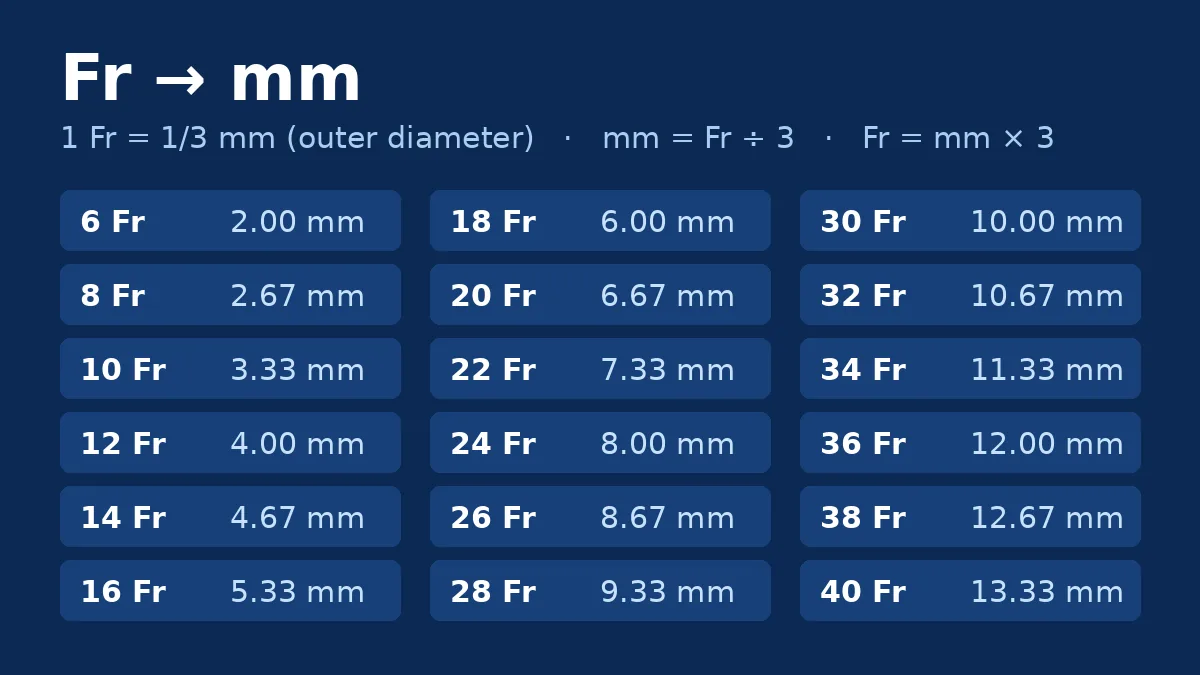
Convert French (Fr) catheter and bougie sizes to mm: 1 Fr = 1/3 mm outer diameter. Chart from 6 to 40 Fr, both formulas and how product OD can differ.
Catheters, drains, sounds and gastric calibration tubes (bougies) are sized in French, written Fr, F or Ch (Charrière). The rule is simple, but it is easy to slip when catalogues, tenders and datasheets mix French sizes and millimetres. This reference gives the formulas, a ready-made chart and the points worth checking before you compare products.
What French means: the scale goes back to Joseph-Frédéric-Benoît Charrière, a 19th-century Paris instrument maker, which is why it is called Charrière (Ch) in much of Europe and French (Fr) in the United States and many other markets. Each step on the scale is one third of a millimetre, and the scale describes the outer diameter of the device. For the background, see our article The history and meaning of the catheter diameter "French".
The formulas: Outer diameter (mm) = Fr ÷ 3 French size (Fr) = outer diameter (mm) × 3 Example: 18 Fr ÷ 3 = 6.00 mm, and a 12 mm tube is 12 × 3 = 36 Fr. For inches, divide the millimetres by 25.4.
French size to outer diameter (nominal values, calculated as Fr ÷ 3, rounded to 2 decimals in mm and 3 in inches): 6 Fr = 2.00 mm (0.079 in) 8 Fr = 2.67 mm (0.105 in) 10 Fr = 3.33 mm (0.131 in) 12 Fr = 4.00 mm (0.157 in) 14 Fr = 4.67 mm (0.184 in) 16 Fr = 5.33 mm (0.210 in) 18 Fr = 6.00 mm (0.236 in) 20 Fr = 6.67 mm (0.262 in) 22 Fr = 7.33 mm (0.289 in) 24 Fr = 8.00 mm (0.315 in) 26 Fr = 8.67 mm (0.341 in) 28 Fr = 9.33 mm (0.367 in) 30 Fr = 10.00 mm (0.394 in) 32 Fr = 10.67 mm (0.420 in) 34 Fr = 11.33 mm (0.446 in) 36 Fr = 12.00 mm (0.472 in) 38 Fr = 12.67 mm (0.499 in) 40 Fr = 13.33 mm (0.525 in)
Many values are recurring decimals (10 Fr is 3.333… mm), so charts from different sources can differ in the last digit depending on rounding.
French size is the outside only. Two tubes with the same French size can have different inner diameters (lumens), depending on wall thickness, material and the number of channels: a multi-lumen catheter shares the same cross-section between several channels. When flow, drainage or the passage of an instrument matters, read the inner diameter from the datasheet instead of estimating it from the French size. On a balloon tube, the French size describes the tube itself; the balloon is specified separately.
The same scale covers very different devices. In our own range, for example, silicone Nelaton catheters are offered in 6–24 Fr, silicone Foley catheters in 8–30 Fr (2-way 8–26 Fr, 3-way 18–30 Fr) and gastric calibration tubes in 32–40 Fr.
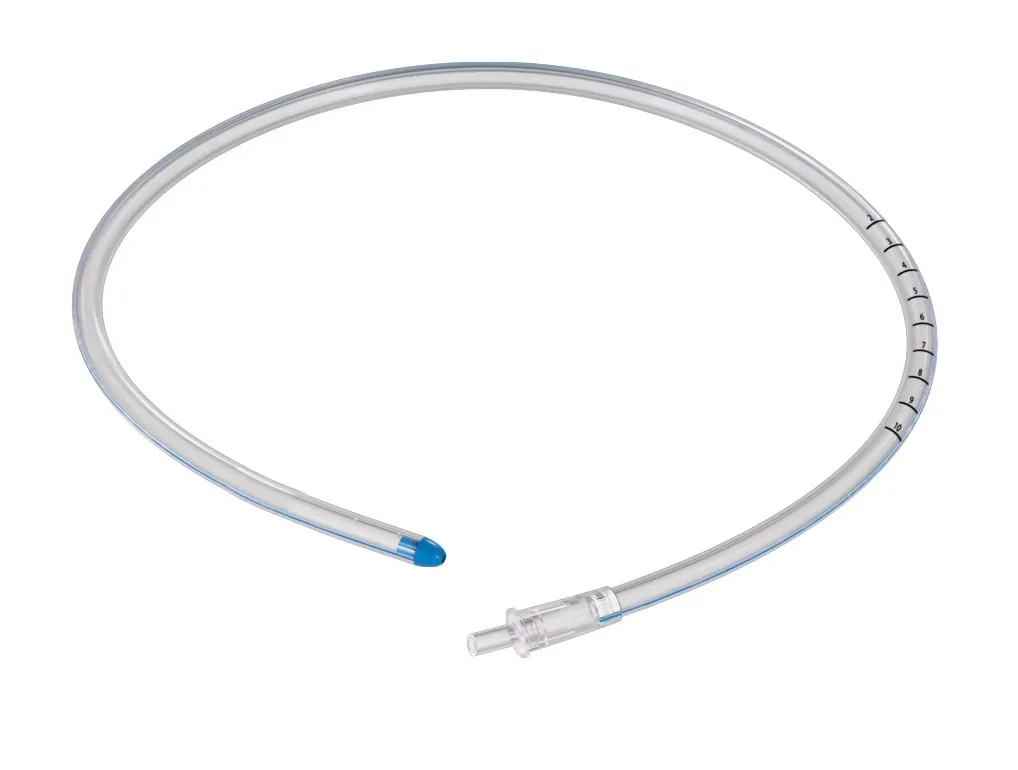
Nominal size versus specified outer diameter: the chart shows nominal values. A product datasheet states the product's own specified outer diameter, which can differ slightly from Fr ÷ 3 because of design and manufacturing tolerances. Our sterile single-use gastric calibration tubes are an example. The Type I standard tube (1,200 mm) and the Type II tube with a 30 mL balloon (745 mm) come in the same five sizes with the same outer diameters: 32 Fr: nominal 10.67 mm, specified OD 10.70 mm 34 Fr: nominal 11.33 mm, specified OD 11.30 mm 36 Fr: nominal 12.00 mm, specified OD 12.00 mm 38 Fr: nominal 12.67 mm, specified OD 12.40 mm 40 Fr: nominal 13.33 mm, specified OD 13.20 mm
So a 40 Fr tube from our range measures 13.20 mm, not the 13.33 mm that a simple conversion suggests, and a 38 Fr tube measures 12.40 mm rather than 12.67 mm. The specified inner diameters of the Type I tube are 6.7, 7.1, 8.0, 8.4 and 8.2 mm (32 to 40 Fr), which also shows that the lumen does not simply scale with the French size. The Type II balloon is specified by volume (30 mL) and inner diameter (40 mm), not in French.
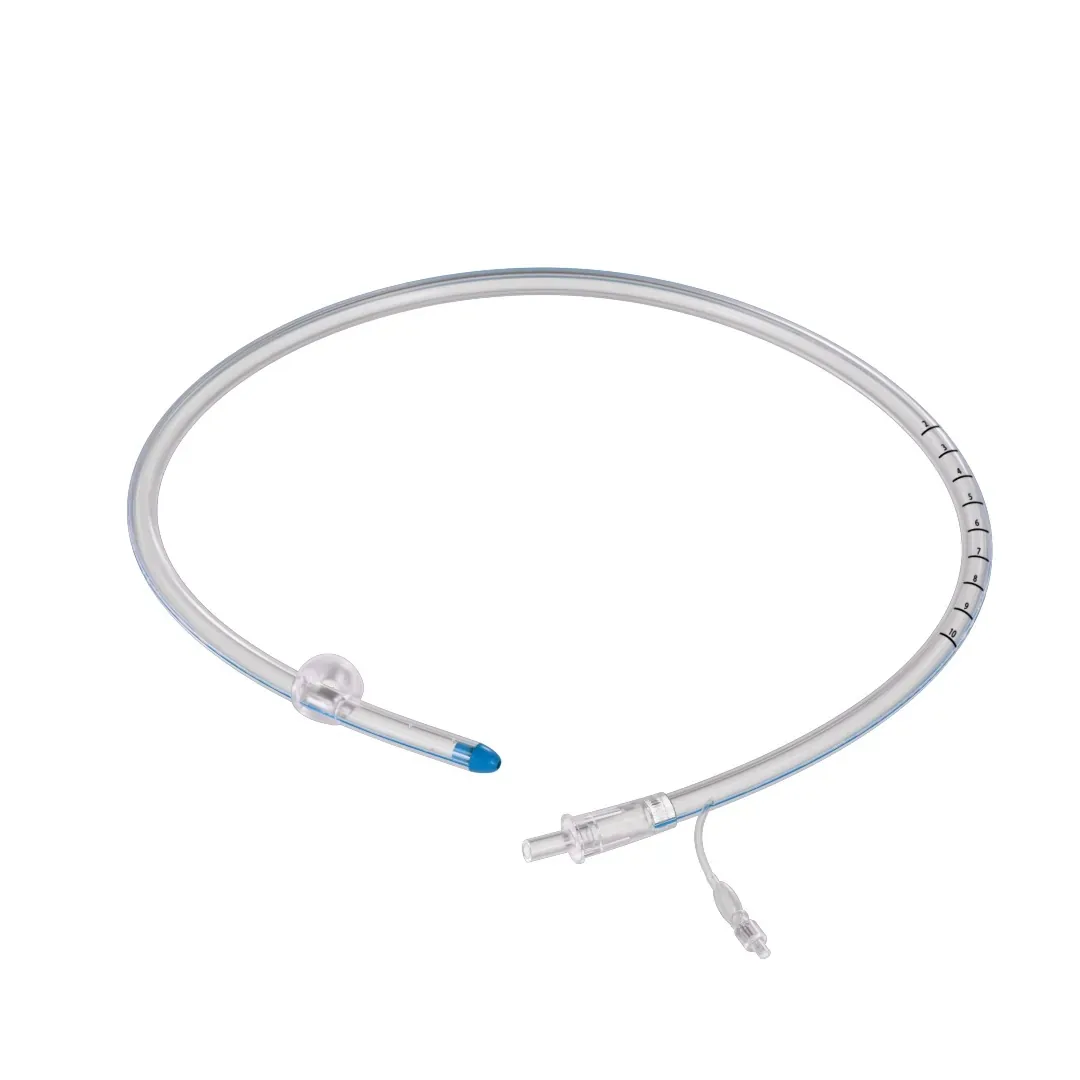
When you compare calibration tubes or catheters from different suppliers, compare the specified outer diameter in mm, the inner diameter, the length and the tolerances in each datasheet, not only the French size printed on the label. Which size suits a patient or a procedure is a clinical decision for the treating team. Published studies on bougie size are summarised in Bougie Size in Sleeve Gastrectomy: Evidence Review 2026, and the balloon tube is described in Type II Pyloric-Stop Balloon Bougie for Sleeve Gastrectomy.
Distributors and hospital buyers can request datasheets, IFUs and samples through our contact page.
Sources: - PubMed PMID 3323304 - PubMed PMID 30005449 - PubMed PMID 16500397
This article is for healthcare and procurement professionals. It explains a unit of measurement and does not constitute medical advice. Device selection is the responsibility of the treating clinician.