Intragastric Balloon Types: Liquid, Gas and Swallowable
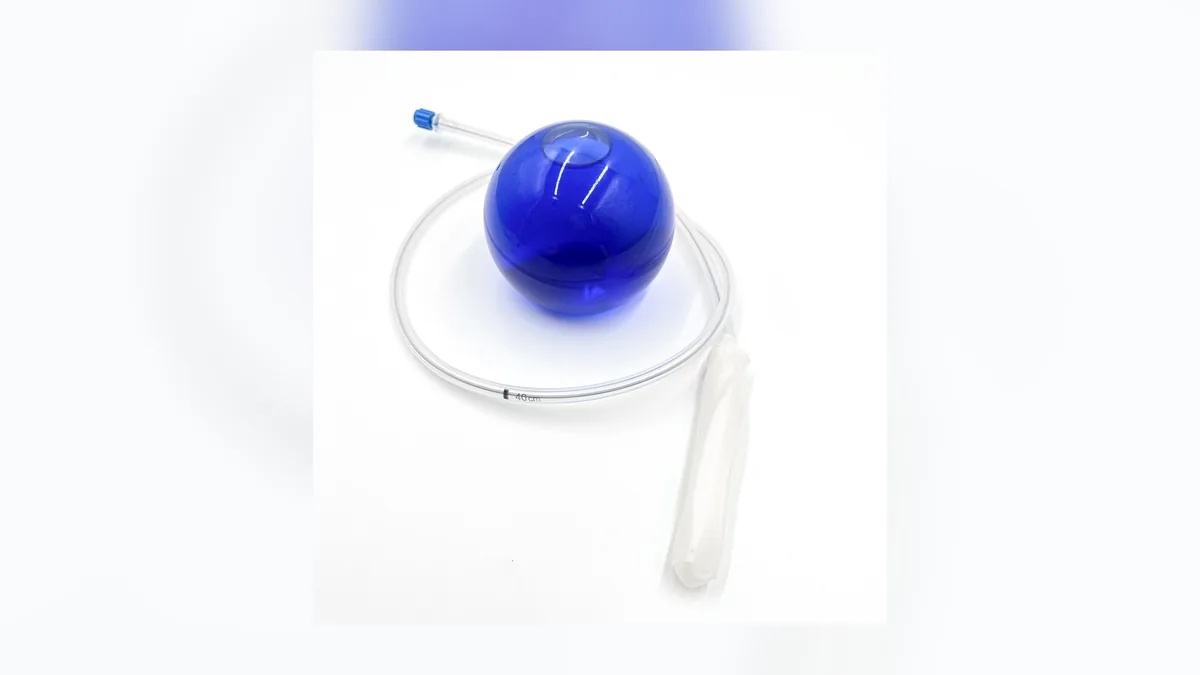
How intragastric balloon types differ: liquid- or gas-filled, endoscopic or swallowable, fixed or adjustable, and what published reviews say about each.
An intragastric balloon (IGB), also called a gastric balloon or stomach balloon, is a soft, temporary device that takes up space in the stomach and helps people with obesity eat smaller portions while they change their diet and habits. Behind this one name sits a family of quite different designs. They differ in what they are filled with, how they reach the stomach, whether their volume can be changed and how long they may stay. This article sorts the main types using two published reviews. It is for education only and does not replace an individual medical assessment.
How a balloon works
A StatPearls review on the NCBI Bookshelf describes the intragastric balloon as a space-occupying, restrictive device that promotes the feeling of fullness and may also slow gastric emptying. The authors note that average gastric capacity is about 1,200 mL and that a balloon volume of 400 mL or more is enough to induce satiation. They also stress that, as with every bariatric treatment, meaningful and lasting weight loss depends on lifestyle changes before and after the device.
Liquid-filled balloons
The most widely used design is a silicone balloon that is placed with an endoscope and then filled with saline. In the StatPearls description, the best-studied liquid-filled balloon holds 400 to 700 mL of saline and stays in the stomach for up to six months. Placement is usually an outpatient endoscopy of about 30 minutes, and patients may go home one to two hours later. A 2021 review by Stavrou and colleagues in the World Journal of Gastrointestinal Endoscopy, which compared the six most commonly used balloons, classes four of those six as liquid-filled designs. The same review notes that a 12-month version of the best-studied liquid-filled balloon has also become available.
Gas-filled balloons
Gas-filled balloons are lighter. Stavrou and colleagues explain that the weight of a liquid-filled balloon was linked to more nausea, vomiting and upper abdominal pain in the first days after placement, and that an air-filled balloon was developed to reduce this problem. It is placed endoscopically and filled with 900 to 1,000 mL of air. The review counts two gas-filled designs among the six, and warns that people with that air-filled balloon must not go scuba diving or travel in unpressurised aircraft cabins. On results, the StatPearls authors cite two meta-analyses that support greater weight reduction with liquid-filled than with air-filled balloons.
Endoscopic or swallowable placement
Most balloons are placed and removed through an endoscope, usually under sedation. Swallowable balloons reduce the need for endoscopy. According to Stavrou and colleagues, one swallowable system consists of thin-walled 250 mL gas-filled balloons that are swallowed, up to three of them about one month apart, for a total of 750 mL. Another, liquid-filled swallowable balloon has a valve that degrades after a set time, so that it deflates by itself and passes naturally through the gut. The review also describes a trade-off: without endoscopy, nobody looks at the stomach for disease before insertion, and easy placement may lead to use in unsuitable patients.
Fixed or adjustable volume
Most balloons are filled once to a fixed volume. Adjustable balloons allow the volume to be increased or reduced during treatment. Stavrou and colleagues describe an adjustable balloon that was the first designed to stay in the stomach for 360 days. The StatPearls review gives the reason adjustability can matter: about 80 to 90% of the weight loss achieved with a balloon happens in the first three to four months, after which the stomach accommodates and part of the restrictive effect is lost.
What the reviews agree on
Both reviews treat the balloon as a temporary aid, not a stand-alone solution. Stavrou and colleagues point out that some studies show limited long-term effectiveness for many patients, with weight returning after removal, which is why follow-up and lifestyle support matter as much as the device itself. For who may be a suitable candidate and what happens after removal, see our article on who an intragastric balloon suits and life after removal.
Where our balloon fits
In these terms, the Shenyun intragastric balloon is a non-adjustable, liquid-filled silicone balloon that is placed and removed endoscopically. It is filled with 400 to 700 mL of saline and, according to its instructions for use, must be removed within six months. The choice of any balloon remains a clinical decision for the treating team.
Sources: - Crossan K, Sheer AJ. Intragastric Balloon. StatPearls, NCBI Bookshelf (last update 2023-01-30) - Stavrou G, Shrewsbury A, Kotzampassi K. Six intragastric balloons: Which to choose? World J Gastrointest Endosc 2021;13(8):238-259