By-Band-Sleeve Trial: What the 3-Year Results Show
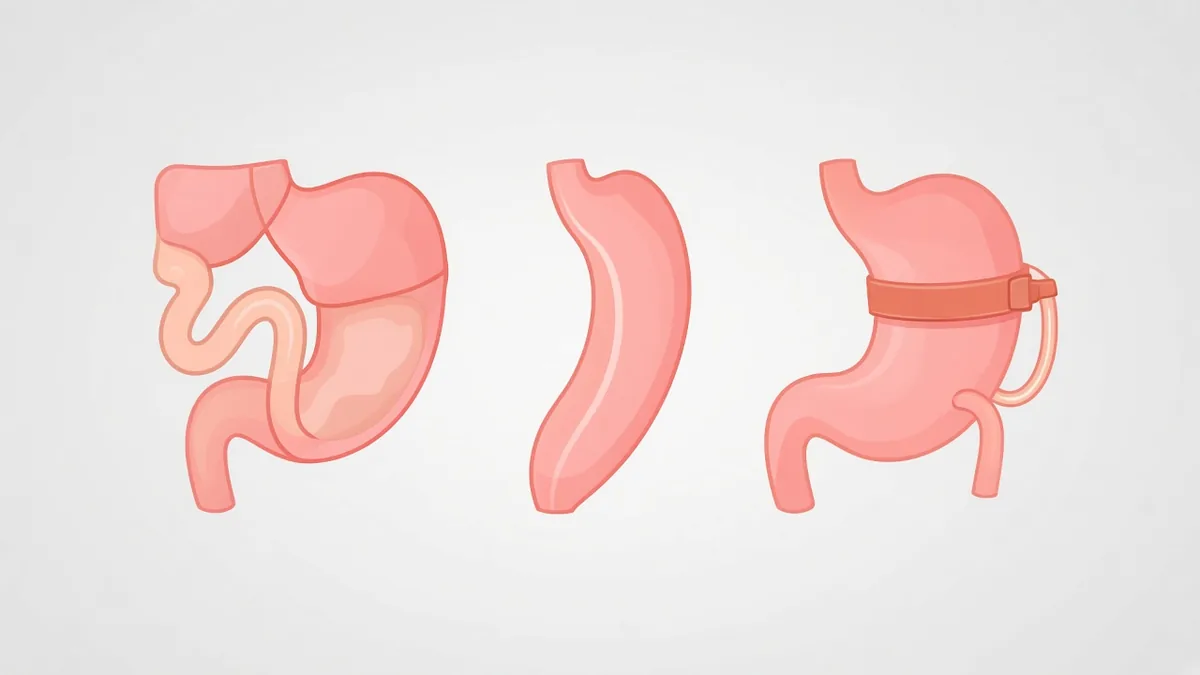
The UK By-Band-Sleeve randomised trial compared gastric bypass, gastric band and sleeve gastrectomy. A summary of the 3-year results and their limits.
Which bariatric operation works best? Most comparisons of gastric bypass, sleeve gastrectomy and the adjustable gastric band come from observational data or small trials. The By-Band-Sleeve trial, published in The Lancet Diabetes & Endocrinology in 2025, is one of the largest randomised comparisons of the three procedures. This article summarises its 3-year results for clinical readers and sets out what the trial can and cannot tell us.
How the By-Band-Sleeve trial was designed
By-Band-Sleeve was a pragmatic, open-label, multicentre randomised trial in 12 UK hospitals. Adults who met national criteria for metabolic and bariatric surgery were eligible. The trial started as a two-group comparison of Roux-en-Y gastric bypass and the adjustable gastric band; sleeve gastrectomy was added as a third group 2.6 years after the study opened, once it had become widely used in the UK.
Between 2013 and 2019, 1351 people were randomised and 1346 were included in the report. Their mean BMI was 46.4 kg/m2 and 76% were women. Of those included, 88% went on to have surgery. The two co-primary outcomes at 3 years were the proportion reaching at least 50% excess weight loss and quality of life measured with the EQ-5D utility score.
Gastric bypass vs sleeve gastrectomy vs gastric band: the results
At 3 years, at least 50% excess weight loss was reached by 68% of participants in the gastric bypass group, 41% in the sleeve gastrectomy group and 25% in the gastric band group. Mean EQ-5D scores were 0.72 after gastric bypass, 0.68 after sleeve gastrectomy and 0.62 after banding.
The trial recorded 1651 adverse events after surgery: 6.0 per year after gastric bypass, 5.7 per year after sleeve gastrectomy and 4.6 per year after banding. There were 11 deaths between randomisation and 3 years; one was attributed to surgery and occurred in the gastric band group during the surgical admission, and ten were not attributable to surgery. In the economic analysis, gastric bypass was the most cost-effective option.
What the investigators concluded
The authors concluded that gastric bypass and sleeve gastrectomy were both more effective than the gastric band, and that sleeve gastrectomy gave inferior weight loss and a lower mean quality-of-life score than gastric bypass. On this evidence they recommend that patients choosing metabolic and bariatric surgery be advised to have a gastric bypass, with sleeve gastrectomy offered where bypass is contraindicated or not feasible. They state that the evidence does not support the adjustable gastric band as a standard treatment for severe obesity. The trial was funded by the UK National Institute for Health and Care Research.
Points to keep in mind
The results are important because they come from randomisation rather than from comparisons of patients selected for different operations. Some limits should be noted: the trial was open label; the sleeve group was added later, so it is smaller; not every randomised participant had surgery; and the outcomes reported here are at 3 years. The choice of operation also depends on each patient's reflux symptoms, comorbidities, preferences and the experience of the surgical team, which a trial average cannot fully capture.
Sources: - By-Band-Sleeve Collaborative Group. Roux-en-Y gastric bypass, adjustable gastric banding, or sleeve gastrectomy for severe obesity (By-Band-Sleeve): a multicentre, open label, three-group, randomised controlled trial. Lancet Diabetes Endocrinol 2025;13(5):410-426 (doi:10.1016/S2213-8587(25)00025-7) - Full text, open access (CC BY 4.0)00025-7)
This article is for general educational purposes for healthcare professionals and does not constitute medical advice. The choice of procedure should be made by the patient together with the multidisciplinary team.