FMS, BMS or Stool Management System: One Device, Many Names
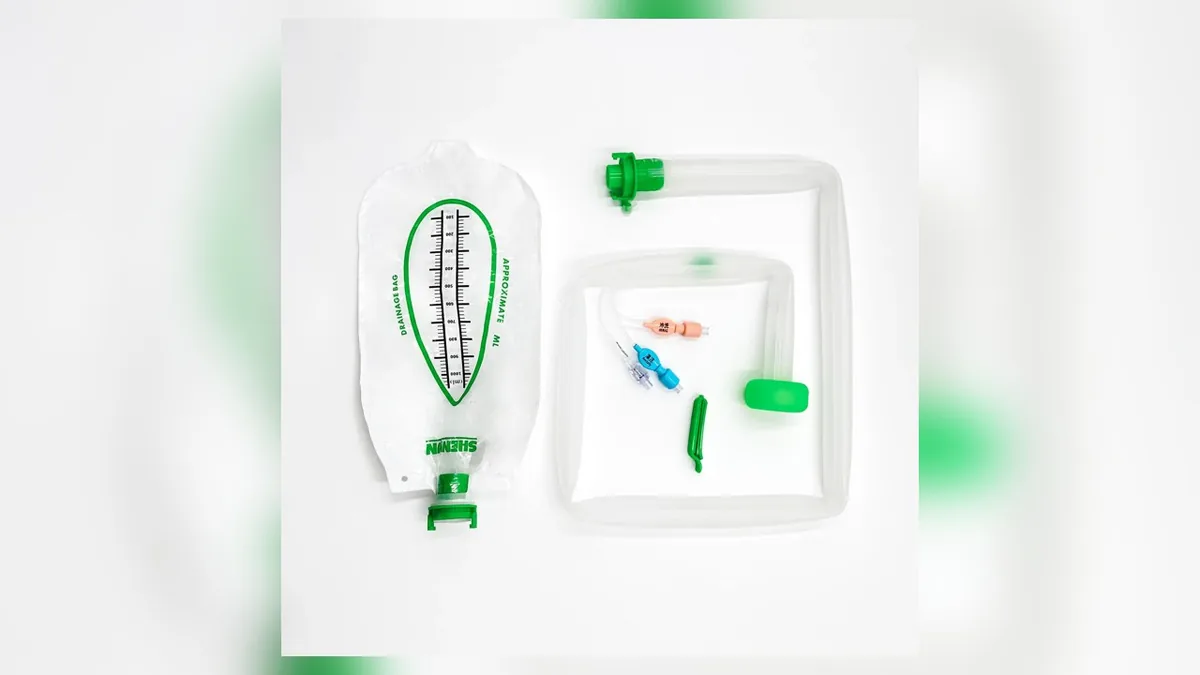
Fecal, faecal, bowel and stool management systems: what each name means, how the indwelling device works, and how it differs from a simple rectal tube.
Search for a device that diverts liquid stool in a bedridden patient and you will meet several names: fecal management system, faecal management system, bowel management system, stool management system and fecal containment device. Clinicians, nursing guidelines and product catalogues use these terms side by side, sometimes for exactly the same device and sometimes for something different. This article explains what each name usually refers to, how the indwelling device works, and where the terminology can mislead.
One device, several names
In the clinical literature, the core device is a soft catheter inserted into the rectum, held in place by a low-pressure retention balloon and connected to an external collection bag. A commentary published by the US Agency for Healthcare Research and Quality describes a fecal management system (FMS) as "a fully closed system that collects and contains liquid or semi-liquid stools", and notes that the systems on the market all redirect stool to an external bag through a rectal catheter secured by an inflated balloon.
The same device appears under different names depending on country, institution and manufacturer:
Fecal management system (FMS) is the most common term in US English. Faecal management system is simply the British spelling of the same thing and is the usual form in UK hospital guidance.
Bowel management system (BMS) is another common name in intensive care. A case report in Case Reports in Gastroenterology uses "indwelling bowel management system" for exactly this kind of balloon-retained rectal catheter, and a 2017 service evaluation in Nursing Standard uses "bowel management system" for the devices used in critically ill patients with diarrhoea-associated faecal incontinence. One London critical care information sheet even introduces the faecal management system as "also known locally as a bowel management system".
Stool management system is a third name for the same concept and appears mainly in product naming.
Indwelling fecal management system is a more descriptive form that some writers use to make clear that the catheter sits inside the rectum, rather than adhering to the skin.
On our website the device is listed as the Fecal Management System Kit.
Names that need more care
Two common search terms overlap with the device but are broader, so they should not be treated as exact synonyms.
Fecal containment device. Some studies use this term for an indwelling, balloon-retained system; for example, a 2011 burn-centre study evaluated a "temporary fecal containment device" of this type for non-surgical faecal diversion in patients with perineal burns. However, the wider family of faecal collection devices also includes external anal pouches, in which an adhesive wafer sticks to the skin around the anus and drains into a bag, as described by the Continence Product Advisor. When you see "fecal containment device", check whether it means an internal catheter or an external pouch.
Rectal tube. This is the broadest term of all. Cleveland Clinic describes several types of rectal tubes: standard tubes used for a short time to release gas or liquid stool, longer decompression tubes, fecal management systems, and catheters designed for giving medication or fluids. A fecal management system contains a rectal tube with a balloon, but not every rectal tube is a fecal management system. A short flatus tube placed for a few hours to relieve gas is a different device with a different purpose, so "rectal tube" alone is too vague to describe an indwelling stool management system.
How an indwelling fecal management system works
Whatever it is called, the design principle is similar across systems. A flexible tube is inserted through the anal canal with the deflated balloon at its tip. The balloon is then filled with a measured volume of water or saline, so that it rests at the base of the rectum and stool flows into the tube instead of around it. The other end connects to a collection bag, creating a closed drainage path.
As an example, Shenyun's Fecal Management System Kit consists of a 1,200 mm drainage tube made of medical-grade PVC and silicone, with a retention balloon at the tip, a balloon port, an irrigation port and an instillation port, plus two 1,000 mL collection bags. According to its instructions for use, the balloon is filled with no more than 45 mL of saline, and a black position indicator line on the tube should rest at the anal margin so that staff can see whether the balloon has moved. A sampling port and a clamp are optional, and the kit is non-sterile and intended for single use. The full structure and specifications are on the fecal management system product page.
Who it is designed for, and who it is not
Published guidance and device instructions agree on the basic profile. These systems are intended for bedridden or immobile adult patients with liquid or semi-liquid stool, in hospitals and care facilities, under the care of trained healthcare professionals. They are not designed for formed stool.
The PSNet commentary lists contraindications that commonly apply across fecal management systems, including suspected rectal mucosal damage, recent large bowel or rectal surgery, rectal or anal injury, severe stricture or stenosis, faecal impaction, rectal or anal tumour and severe haemorrhoids. It also notes that patients need adequate anal sphincter tone for the balloon to stay in place, that the devices should not be used in mobile patients, and that they are contraindicated in people under 18. Device-specific instructions add their own limits. Shenyun's instructions, for instance, list recent rectal anastomosis or anal or sphincter reconstruction within the last six weeks, defects of the anterior rectal wall, and patients who cannot accommodate the balloon fill volume. Always follow the instructions for the specific device in use.
Known risks and the need for daily checks
Indwelling systems are useful tools, but they are not risk-free. PSNet lists potential adverse events including loss of anal sphincter tone, pressure necrosis of the rectal or anal mucosa, infection, bowel obstruction, perforation, persistent rectal pain, rectal bleeding and abdominal distention, and recommends daily assessment. The indwelling bowel management system case report describes life-threatening rectal bleeding from mucosal pressure necrosis after 11 days of continuous use. PSNet notes that the devices it reviewed could be used for up to 29 days.
The evidence base is also thinner than many clinicians expect. A review of continence management systems for acute faecal incontinence in hospital identified 197 records, of which 10 studies met the inclusion criteria, and none of them was a randomised controlled trial. The authors concluded that there was little evidence to support a standardised approach.
Why the terminology matters
Consistent terminology helps in practical ways. A nurse searching a hospital formulary, a clinician reading a case report from another country, or a purchasing team comparing product lists may all be looking for the same device under a different name. Knowing that fecal management system, faecal management system, bowel management system and stool management system usually describe the same balloon-retained, closed drainage device, while fecal containment device and rectal tube can mean something broader, reduces the risk of confusion when reading the literature or writing local protocols.
Urinary incontinence is managed with different devices, such as indwelling or external urinary catheters; for an example of a non-invasive option for men, see our male external catheter page.
Sources: - Ousey K. An Easily Forgotten Tube. PSNet, AHRQ, 2014 - Cleveland Clinic. Rectal Tube: Insertion, Removal and Why It Is Used (reviewed 2026-04-28) - Bright E et al. Indwelling Bowel Management System as a Cause of Life-Threatening Rectal Bleeding. Case Rep Gastroenterol 2008 - Ritzema J. Bowel management systems in critical care: a service evaluation. Nurs Stand 2017 - Kement M et al. Clinical evaluation of a temporary fecal containment device for non-surgical fecal diversion in perineal burns. Ulus Travma Acil Cerrahi Derg 2011 - Ousey K et al. Effective management of acute faecal incontinence in hospital: review of continence management systems. Frontline Gastroenterol 2010 - ACCU London. Faecal Management System (critical care information sheet) - Continence Product Advisor. Products for faecal incontinence
This article is for general educational purposes for healthcare professionals and does not constitute medical advice. Selection, insertion and monitoring of any fecal management system should follow local protocols and the manufacturer's instructions for use.