Drains After Bariatric Surgery: Routine, Selective or None?
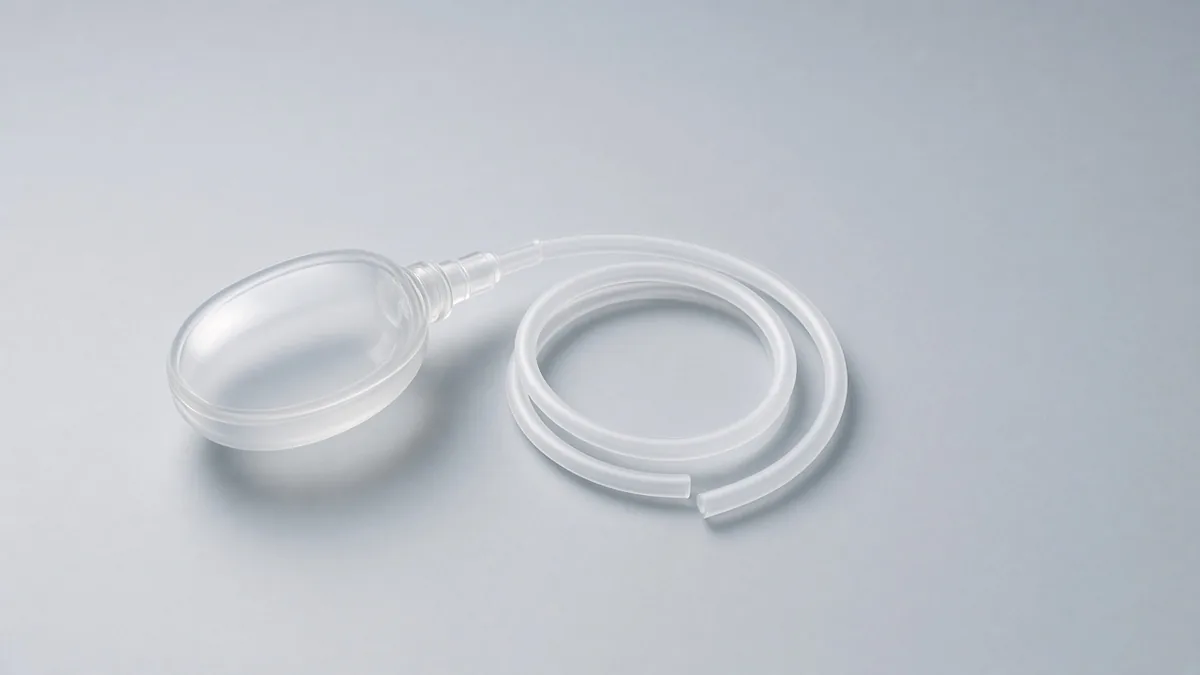
Should a JP drain be left after sleeve gastrectomy or gastric bypass? What recent registry data and a drain-free series show, and the limits of that evidence.
Leaving a closed suction drain, such as a JP (Jackson-Pratt) drain, next to the staple line or anastomosis was once common after bariatric surgery. The idea is that a drain may give early warning of a leak or bleeding and may allow some collections to drain without another operation. Over the past decade many teams have moved away from routine drains. This article reviews recent evidence on drain use after bariatric surgery. Its purpose is clinical education; it does not prescribe a policy for any unit.
How often are drains still used?
Use is falling but has not disappeared. An analysis of the US MBSAQIP registry covering 526,723 patients who had a primary bariatric operation between 2020 and 2022 found that drain use fell from 8.7% to 6.1% over the three years. In conversional and revisional procedures, where operations are often more complex, a separate MBSAQIP analysis of 64,495 patients found drains in 19.1% of cases in 2020 and 14.4% in 2022. In a 2025 national survey of Polish bariatric centres, 66.7% of centres reported that they do not routinely place a drain after sleeve gastrectomy.
What the registry data show
In the primary-surgery analysis, patients with a drain had more complications after adjustment for measured risk factors: serious 30-day complications (adjusted odds ratio 1.24), anastomotic leak (2.1), organ-space infection (2.0), reoperation (1.2) and a longer hospital stay. The revisional-surgery analysis found the same direction: serious complications (1.45), leak (2.25), organ-space infection (2.12) and reoperation (1.37).
These associations need careful reading. Drains were placed more often in older patients, in patients with a higher BMI and more comorbidities, and in anastomotic procedures. In revisional surgery, having an intraoperative leak test also predicted drain use, and the reasons surgeons placed drains were not recorded. A surgeon who is worried about a difficult case is more likely to leave a drain, so the drain may be a marker of risk rather than a cause of complications. Both papers conclude that surgeons should be judicious in selecting patients for a drain, and the primary-surgery paper calls for prospective, controlled studies.
Experience without routine drains
A 2026 single-surgeon series reported 1,122 primary and revisional bariatric operations performed between 2018 and 2024 without drains, within an enhanced recovery (ERAS) pathway. The 30-day morbidity was 3.2%. Leaks occurred in 5 patients (0.4%) and gastrointestinal bleeding in 13 (1.2%), and more than 92% of patients went home on the first postoperative day. Most major events appeared after the period during which a drain would usually have been removed. As a single-surgeon series, it may not reflect other settings.
Routine, selective or none?
Taken together, the evidence leans against routine prophylactic drains after primary bariatric surgery. It does not show that drains are never useful: none of these studies was randomised, and some surgeons still choose selective use in higher-risk or revisional cases. Where a drain is used, closed suction (negative pressure drainage) systems are common; the key points are a clear indication, a plan for monitoring output, and timely removal. Drain design, materials and reservoir pressure, and the clinical evidence comparing closed-suction with passive drains, are reviewed in our technical paper on closed-suction versus passive surgical drains. Whatever a unit decides, a drain does not replace clinical vigilance, since many complications present after discharge.
Sources: - Meyer DJ et al. Modern Trends of Drain Placement in Primary Bariatric Surgery: An MBSAQIP Analysis of 526,723 Patients. Obes Surg 2025 (doi:10.1007/s11695-025-07760-5) - Meyer DJ et al. Drain placement in conversional and revisional bariatric surgery, MBSAQIP 2020 to 2022. J Clin Med 2025 (doi:10.3390/jcm14072456) - Hsu JL et al. Feasibility and Outcomes of a Uniform Drain-Free Strategy for Primary and Revisional Metabolic Bariatric Surgery under an ERAS Protocol. Obes Surg 2026 (doi:10.1007/s11695-026-08599-0) - Sroczyński P et al. Technical variability and safety of sleeve gastrectomy: a nationwide survey of bariatric centers in Poland. Videosurgery 2025 (doi:10.20452/wiitm.2025.17954)
This article is for general educational purposes for healthcare professionals and does not constitute medical advice. Decisions about drain use rest with the operating surgeon and the multidisciplinary team.