Type I vs Type II Gastric Calibration Tubes
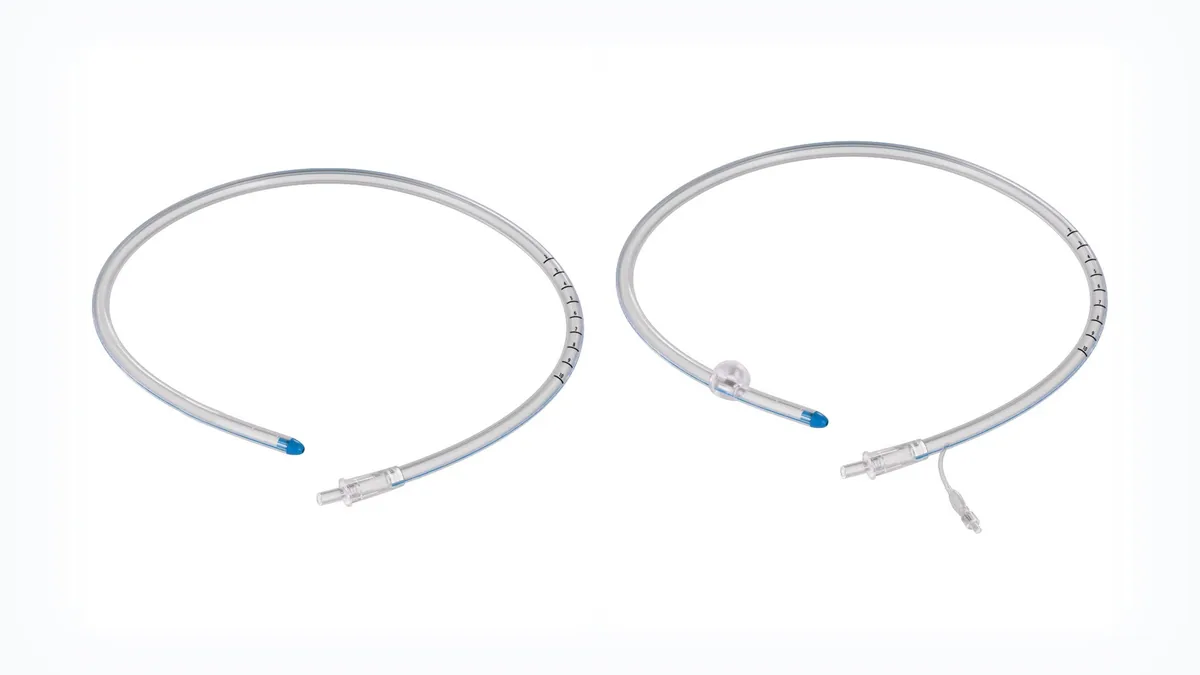
Side-by-side Type I and Type II gastric calibration tube specs for distributors: length, Fr sizes, balloon, and the fields to put on an RFQ.
Suzhou Shenyun Medical Equipment Co., Ltd. manufactures gastric calibration tubes in its own factory in Suzhou, China, in a 4,000 m² facility that includes a Class 100,000 cleanroom, and exports to 50+ countries and regions. This article is a procurement comparison of the two catalogue types. It is not a clinical protocol and does not recommend a tube size or technique for any procedure. Size preferences vary by hospital and surgeon; for a Fr-focused selection discussion see our size selection guide and the 2026 evidence review of bougie size in sleeve gastrectomy. For millimetre equivalents, use the French (Fr) to mm conversion chart.
The two types, in buyer language
The standard gastric calibration tube (Type I) is also called a gastric sizing tube or bariatric surgery bougie. It is a 1,200 mm tube of medical-grade silicone with depth markings, a radiopaque line, a central channel with auxiliary holes, and a conical connector that can be used with injection devices for intraoperative irrigation and methylene blue leak testing. It is listed for sleeve gastrectomy, gastric bypass and gastrectomy, as well as gastric decompression, aspiration and irrigation.
The balloon-type gastric calibration tube (Type II) is also searched as a balloon gastric calibration tube, LSG calibration tube, pyloric stop tube or gastric volume sizing tube. It adds an approximately 30 mL balloon to the calibration-tube design. The catalogue length is 745 mm. When the balloon is filled, it can act as a pyloric stop to help keep the tube in position during laparoscopic sleeve gastrectomy (LSG), while the tube can still be used for aspiration, drainage and methylene blue staple-line leak testing. A longer product introduction is in article 10022.
Specification table (from the product data)
Type I — Gastric Calibration Tube. Colour in the catalogue: blue. Length: 1,200 mm.
| Model | Size (Fr) | OD (mm) | ID (mm) | Length (mm) | |---|---|---|---|---| | SY01-04 | 32 Fr | 10.70 | 6.7 | 1200 | | SY01-00 | 34 Fr | 11.30 | 7.1 | 1200 | | SY01-01 | 36 Fr | 12.00 | 8.0 | 1200 | | SY01-02 | 38 Fr | 12.40 | 8.4 | 1200 | | SY01-03 | 40 Fr | 13.20 | 8.2 | 1200 |
Type II — Sterile Single Use Gastric Calibration Tube - Balloon Type. Balloon capacity: 30 mL. Balloon ID in the catalogue: 40 mm. Length: 745 mm.
| Model | Size (Fr) | OD (mm) | Length (mm) | Balloon capacity | Balloon ID | |---|---|---|---|---|---| | SY02-04 | 32 Fr | 10.70 | 745 | 30 mL | 40 mm | | SY02-00 | 34 Fr | 11.30 | 745 | 30 mL | 40 mm | | SY02-01 | 36 Fr | 12.00 | 745 | 30 mL | 40 mm | | SY02-02 | 38 Fr | 12.40 | 745 | 30 mL | 40 mm | | SY02-03 | 40 Fr | 13.20 | 745 | 30 mL | 40 mm |
Shared catalogue points: medical-grade silicone; depth markings and a radiopaque line; single-use; EO sterilized (as stated on the product pages). Type I structure listed on the product page: tube body, inner cone connector, silicone tip, universal connector, check valve and radiopaque line. Type II adds the balloon; the product page also lists a check valve and universal connector.
The OD values at each Fr size match across the two types in the current tables. Type I also publishes an inner diameter. Type II publishes balloon fill volume and balloon inner diameter instead. Buyers comparing quotes should not assume the two types are interchangeable on length or balloon features.
What to put on an RFQ or specification sheet
A clear written request usually shortens back-and-forth. The following fields can be copied into a distributor or hospital specification. They describe the device; they are not a clinical order set.
1. Type: Type I (no balloon, 1,200 mm) or Type II (about 30 mL balloon, 745 mm), or both if the account stocks two lines. 2. Size list: which of 32 / 34 / 36 / 38 / 40 Fr, and whether the mix is already defined by the hospital. 3. Identifiers: model codes (SY01-… or SY02-…) and the outer diameter that corresponds to each Fr size. 4. Features to confirm against the IFU and the product page: radiopaque line, depth markings, connector type, and — for Type II — balloon fill volume (30 mL) and balloon ID (40 mm). 5. Intended procedure context, if known (for example LSG versus a mixed bariatric tray). This helps match type; it does not replace the IFU or the surgeon’s protocol. 6. Packaging, label language, and the documents the importer or hospital file requires. Ask for the current product page, brochure and IFU rather than relying on a memorised older table. 7. Quantity by model, not only a total piece count.
If a buyer only writes “bougie for sleeve,” the reply still has to split Type I from Type II and list Fr sizes, because length and balloon presence are different.
Shenyun Medical can provide specifications and a quotation from the factory in Suzhou. Use the contact form and name the models or Fr sizes you need.
Sources: - Type I product page (models, Fr, OD, ID, length) - Type II product page (models, Fr, OD, length, balloon volume and balloon ID) - Existing size-selection guide (internal context, not repeated here)