Four months after the operation, he lost 50 kilograms in weight. The bariatric surgery made him a completely different person
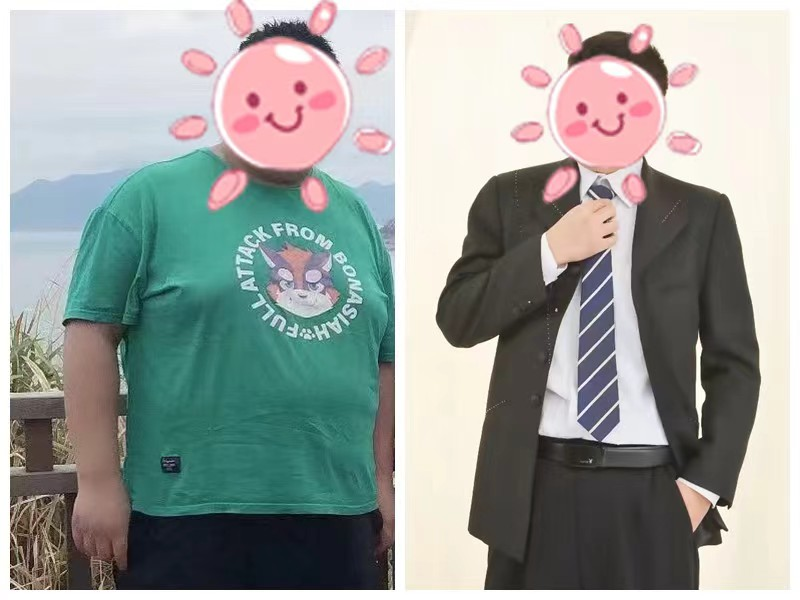
Recently, Dr. Cui Lei, a chief physician in the Department of Gastrointestinal Surgery at Jiangsu University Affiliated Hospital (Jiangbin Hospital of Zhenjiang City), received several photos sent by a patient named He Tao (a pseudonym) who had undergone surgery here before. In the photos, He Tao was dressed in a suit, with confidence evident in hi
Recently, Dr. Cui Lei, a chief physician in the Department of Gastrointestinal Surgery at Jiangsu University Affiliated Hospital (Jiangbin Hospital of Zhenjiang City), received several photos sent by a patient named He Tao (a pseudonym) who had undergone surgery here before. In the photos, He Tao was dressed in a suit, with confidence evident in his expression. Cui Lei said, "More than half a year ago, He Tao weighed 280 pounds. He looks like a completely different person now. I still have dozens of severely obese patients like He Tao in my WeChat contacts. They are all very satisfied after undergoing weight loss surgery." This is the greatest wish of 32-year-old He Tao. Due to severe obesity, He Tao not only has to endure others' strange looks but also suffers repeated setbacks in work and life. He said, "Around the age of 20, I felt like a balloon getting fatter and fatter. At my peak, I weighed 150 kilograms. I also tried various weight loss methods, but none of them had a significant effect. My weight has always been around 140 kilograms." It is known that He Tao was once a forklift driver, but the cramped cabin of the forklift made it impossible for him to move freely after he gained weight. Eventually, he lost this job. Due to severe obesity, he couldn't even sleep flat on his back, and his movements became increasingly difficult. His physical condition deteriorated day by day. More than half a year ago, He Tao happened to see a popular science video about bariatric surgery by Cui Lei on the Internet. Determined to lose weight, he immediately came to the Affiliated Hospital of Jiangsu University. After examination, He Tao was found to have multiple diseases such as severe fatty liver, diabetes, hypertension, hypothyroidism and hypercortisolism. "The patient's body mass index (BMI) has reached 42, while the normal range is 18 to 24," said Cui Lei. "Obesity is not just about appearance; it is closely related to human health. Severe obesity can affect all organs and systems in the body. Many patients cannot sleep in a supine position because they feel short of breath as soon as they lie flat. This is mainly due to excessive fat accumulation, which causes narrowing of the airways. If obesity is left untreated, it may seriously threaten the patient's life." After comprehensive assessment and analysis, the team led by Cui Lei formulated a metabolic weight loss surgery plan for Why Tao and successfully carried out a laparoscopic sleeve gastrectomy with enhanced recovery after surgery (ERAS). Cui Lei introduced that after this kind of surgery, the patient's stomach would become banana-shaped, so sleeve gastrectomy is also called "banana stomach" surgery. It would remove the bottom part of the patient's stomach, reducing the stomach's volume to about 20% of its original size, thereby decreasing the patient's food intake. The bottom part of the stomach secretes hunger hormones, and its removal would significantly reduce the feeling of hunger. Four mo