Suction Tube Series
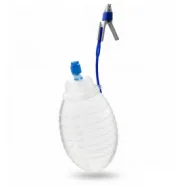
Disposable Vacuum Suction Ball
Transparent medical-grade silicone vacuum bulb, 100 or 200 mL, with volume scale and anti-reflux one-way valve, top or bottom outlet. Provides manual negative pressure for closed wound drainage.
Product Information
Transparent medical-grade silicone vacuum bulb, 100 or 200 mL, with volume scale and anti-reflux one-way valve, top or bottom outlet. Provides manual negative pressure for closed wound drainage.
Structure & Components
1
Sterile drainage catheter, optional connectors, guide needle, negative-pressure reservoir (bulb) and, for Type IV, a collection bag. Materials: medical-grade silicone or PVC.
Features
Medical-grade silicone for excellent biocompatibility
Transparent with markings for visual monitoring of drainage volume and fluid color
Built-in check valve/anti-reflux design to prevent fluid backflow
Available in 2 sizes and 2 outlet orientations
Specifications
| Model | Capacity (ml) | Outlet Direction |
|---|---|---|
| CP-0127 | 200 ml | Bottom outlet |
| CP-0128 | 200 ml | Top outlet |
| CP-0129 | 100 ml | Top outlet |
| CP-0130 | 100 ml | Bottom outlet |
Indications & Contraindications
Indications
- To drain body fluids (e.g. blood, serous fluid) from superficial wounds or surgical incisions in a closed, sterile system.
- Intended user: trained healthcare providers.
- Intended environment: hospitals and surgical facilities.
Contraindications
- Known allergy to silicone or PVC materials.
How to Use
Pre-use inspection
- 1Verify packaging integrity and the sterilization indicator.
- 2Confirm that the product is within its 3-year shelf life.
Catheter placement
- 1Perform hand hygiene and don sterile gloves.
- 2Attach the guide needle assembly to the catheter.
- 3Under aseptic conditions, puncture the target site and advance the catheter to the desired depth.
- 4Withdraw the guide needle, leaving the catheter in place.
System assembly
- 1Select the matching connector and secure it to the catheter hub.
- 2Attach the reservoir to the connector and squeeze it fully to create vacuum.
- 3Open the valve to start drainage.
- 4Transition to collection bag (Type III and IV)
- 5When the reservoir is full or continuous drainage is required, empty or collapse the reservoir.
- 6Connect the collection bag inlet to the connector valve outlet.
- 7Hang the bag below the insertion site to maintain gravity drainage.
Removal
- 1Clamp the catheter near the insertion site.
- 2Disconnect all tubing and remove the adhesive anchor.
- 3Withdraw the catheter gently and apply a sterile dressing.
- 4Dispose of all components as medical waste.
Routine care
- •Flush the catheter every 8–12 hours with 10–20 mL sterile saline (clamp vacuum, flush, then re-establish vacuum).
- •Change the dressing daily; inspect the site for leakage, redness or infection.
- •Record drainage volume, colour and characteristics each shift; monitor vital signs and pain at the insertion site.
- •Maximum recommended duration: 29 days (clinical judgement prevails). Assess every 8 hours.
- •If drainage stops, blood appears, or signs of infection or distress occur, notify the physician and consider adjustment or removal.
Summary from the Instructions for Use. Use by qualified personnel according to the full Instructions for Use.
Warnings & Storage
Warnings and precautions
- Single use only; do not re-sterilize.
- Maintain strict asepsis.
- Verify the sterilization indicator (blue means sterile). Do not use if the package is damaged or shows a non-sterile indicator.
- Discontinue immediately if signs of allergic reaction or infection appear.
- For use by trained healthcare providers only; improper operation may put patient safety at risk.
- Use only manufacturer-provided or validated connectors that match the catheter inner diameter; perform a leak test before use.
- If lubrication is needed, use only a sterile water-soluble lubricant (e.g. medical glycerin); do not use petroleum-based products.
Storage, transport and disposal
- Shelf life: 3 years from the production date.
- Storage: cool, ventilated and dry area.
- Transport: protect against dampness, compression and rain; avoid collisions, friction or scratches with hard objects.
- After use, the product may be contaminated. Dispose of it as medical waste according to hospital procedures and local regulations.