Which is better: silicone catheters or latex catheters? Shenyun Disposable Painless Silicone Urinary Catheter Kit brings a distinct experience to clinical practice.
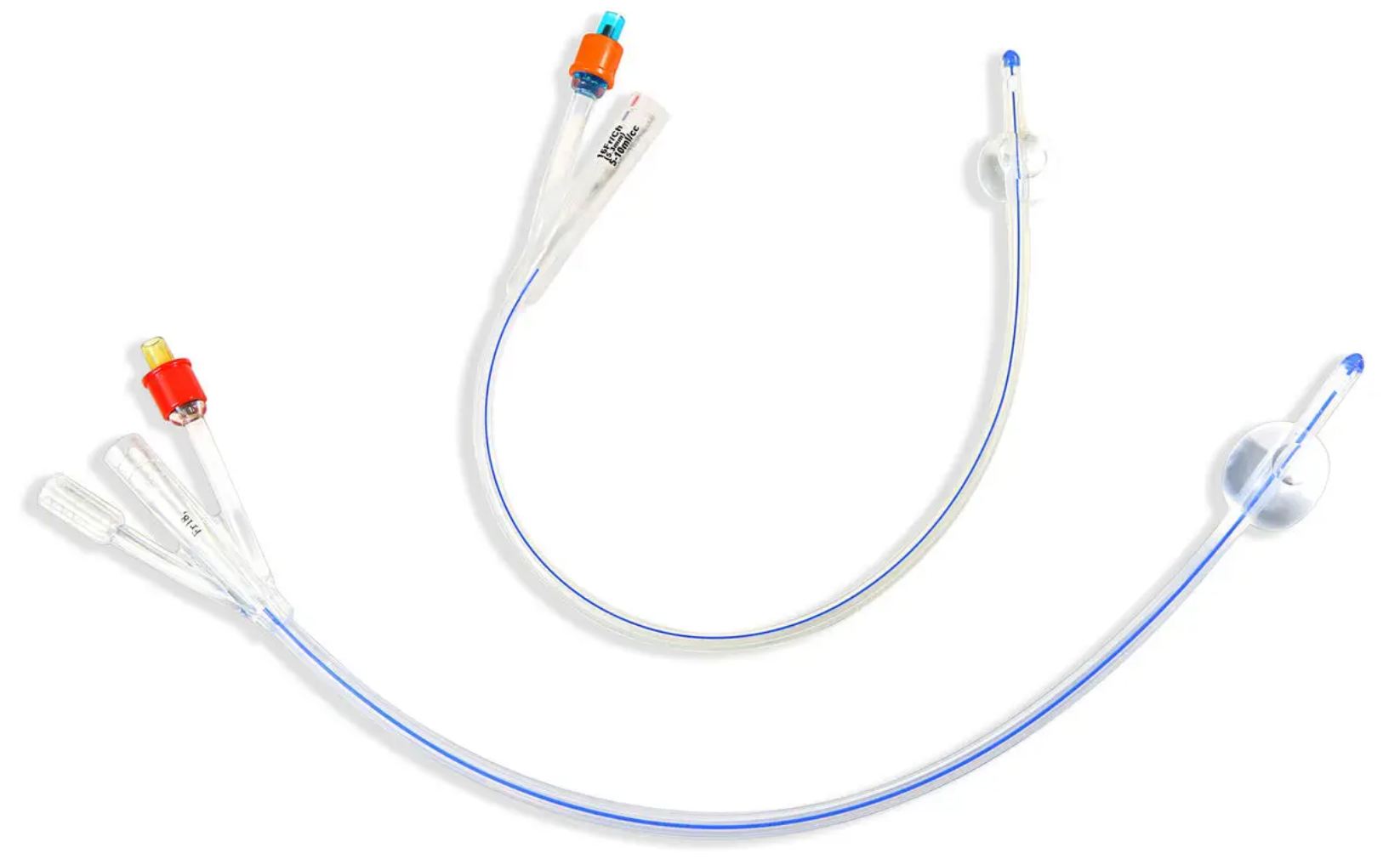
A silicone urinary catheter is a urinary catheterization device that is inserted into the bladder through the urethra, fixed in the bladder with a balloon, and connected to a urine bag to collect urine. Since it needs to be implanted into the human body, the safety of the catheter is a concern for everyone. High-environmental-protection silicone ur
A silicone urinary catheter is a urinary catheterization device that is inserted into the bladder through the urethra, fixed in the bladder with a balloon, and connected to a urine bag to collect urine. Since it needs to be implanted into the human body, the safety of the catheter is a concern for everyone. High-environmental-protection silicone urinary catheters are gradually replacing the original latex and rubber catheters. A silicone urinary catheter consists of a conical interface, a valve, a balloon, and a silicone tube body. According to its structure, it can be divided into different models such as three-lumen, two-lumen, single-lumen, and disposable single-use catheterization. The prices of catheters with different specifications and models also vary. Silicone urinary catheters are currently divided into disposable catheters and indwelling catheters, which are used in different fields. The retention time of indwelling catheters is limited to 30 days. The organic silicone material retained in the human body has good compatibility with human tissues, will not be rejected, digested or absorbed by human tissues, and there will be no allergic reactions within the indwelling time. Why can silicone urinary catheters quickly replace latex urinary catheters? What are the differences between the two? Let's take a look at the specific comparison. Compared with latex catheters, silicone urinary catheters are significantly superior in terms of biocompatibility, irritation to the urethra, smoothness, encrustation, infection probability, X-ray developability, safety balloon fixation, transparent tube color, and full catheter cross-section. It has become a trend in clinical practice to replace latex with silicone. There are significant differences between the disposable silicone urinary catheter kit produced by Shenyun Medical and other three-lumen catheter kits with silicone components available on the market. Shenyun's product has obvious advantages and can solve key issues in indwelling catheterization care. ndard structure of a conventional three-lumen silicone urinary catheter consists of a drainage cone interface, a balloon inflation cone interface, a catheter body, a urination hole, a balloon, and a one-way valve. It only has the functions of urinary catheterization and bladder irrigation, and is prone to causing pain and discomfort. It is also ineffective in addressing the restlessness, discomfort, and pain experienced by patients during indwelling. Some patients even have the urge to remove the catheter when they cannot bear the discomfort, which is a problem existing in catheter care during indwelling. Shenyun Medical's disposable painless urinary catheterization kit is significantly different from ordinary three-lumen silicone urinary catheter kits, mainly due to its unique product design. The key difference is that it has a separate drug administration channel and a drug release hole. The drug release hole is located at the most sensitive po